

TOKYO TO INCHEON (SEOUL)
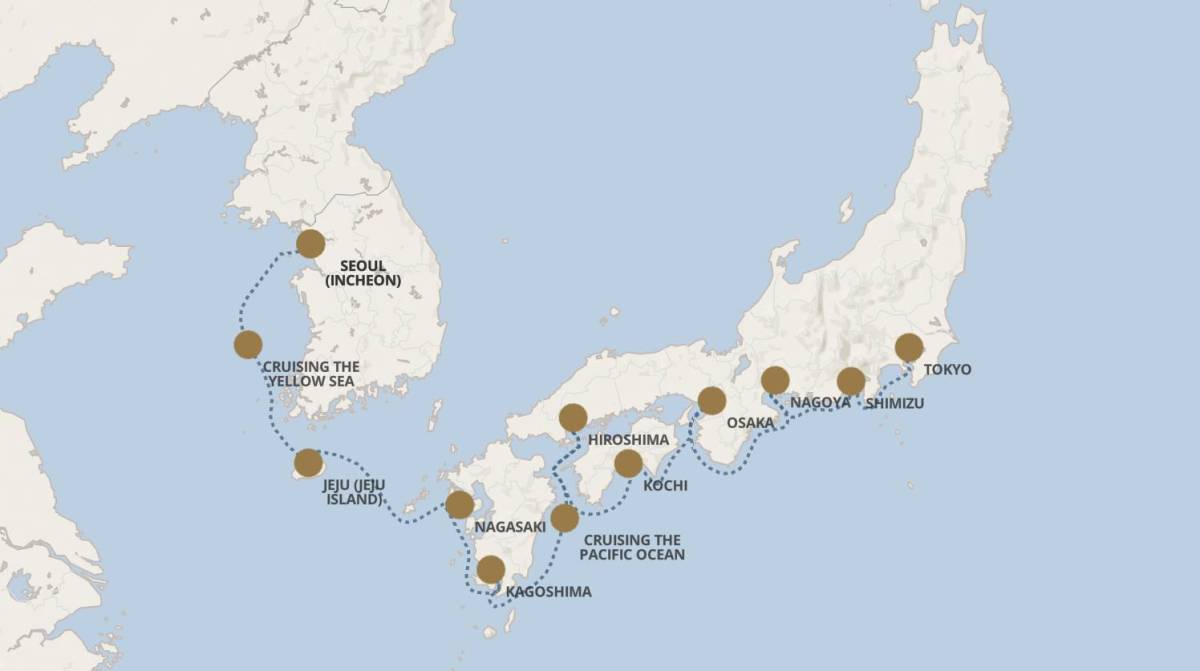
After travelling around Japan years ago and thoroughly enjoying it we decided to travel back but this time go to places in Japan that we’d missed out the first time but also add on South Korea.
Tokyo, Japan
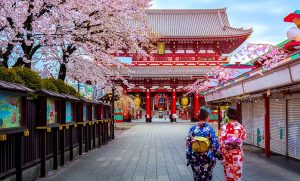
Dense and delightful, a city where ancient traditions blend seamlessly with the future’s sharpest edge. Futuristic – second-accurate – transport seamlessly links Tokyo’s 14 districts, while the glow of flashing advertisement boards and waves of humanity flowing along its streets, adds to the glorious sensory overload. One of Tokyo’s most iconic sights is the flood of people scrambling to cross Shibuya’s famous intersection, as crowds of briefcase-carrying commuters are given the green light to cross at the same time. The culture is immensely rich and deep, with 7th-century, lantern-decorated temples, stunning palaces, and tranquil scarlet shrines waiting below cloaks of incense and nestling between soaring skyscrapers.
Tokyo, Japan

Once the modest fishing village of Edo, modern Tokyo is a sprawling metropolis of extraordinary neighborhoods that is the sum of its seemingly endless parts: The tiny bars of Shinjuku’s Golden Gai. The culinary delights of Nihombashi. Akihabara’s electronic gadgets and manga culture. The pottery shops of Asakusa. Nihombashi’s shopping meccas. Choose from museums covering every aspect of Japanese history and culture – don’t miss the treasures of the Tokyo National Museum. Visit the glorious Imperial Palace and Senso-ji temple in the ancient district of Asakusa. Dive into an unrivaled urban food scene that rewards the intrepid. And, of course, snap a selfie in Shibuya Crossing.
Shimizu, Japan
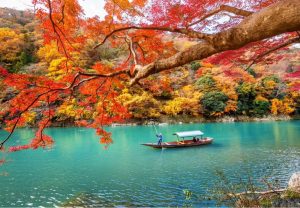
Without doubt one of Japan’s most beautiful ports, Shimizu offers a stunning gift on arrival — the iconic symmetrical cone of Mount Fuji rising majestically. The ultimate Japanese view, it’s a breathtaking vision of grace and volcanic power, with the snow-capped peak soaring larger than life. Beyond the drama of Fuji, Shimizu’s scenic coastline and UNESCO World Heritage landscapes are layered with traditional beauty. Historic Shinto shrines stand amid pine groves, while green tea fields ripple across nearby hills. The port is also a gateway to some of Japan’s finest sushi, prepared with dedicated artistry. Shimizu invites you to explore at your own pace, experiencing the soul of Japan through landscapes and traditions.
CASTLE GARDEN & SHIZUOKA SENGEN SHRINE
Explore the grounds of a castle where the legendary Shogun warrior Ieyasu once lived. Browse a collection of revealing artifacts at a shrine that is architecturally extraordinary. Behold Mount Fiji from Miho no Matsubara, a perspective that has long inspired artists.
Nagoya, Japan
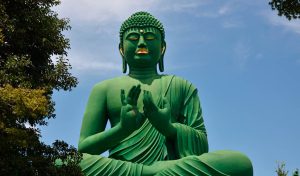
Nagoya may lack the name recognition of Tokyo and Osaka, but cosmopolitan Nagoya impresses with an array of museums, temples and green spaces. In this birthplace of Toyota absorb the ancient spirituality of Atsuta Shrine, one of Japan’s three most important Shinto shrines and a perfect spot to enjoy a lunch of kishimen (flat noodles), a local specialty. Immerse yourself in over 10,000 pieces of Japanese art, theater, fashion, samurai culture and more at Tokugawa Art Museum. Gain an instant appreciation for Japanese postwar history at SCMAGLEV and Railway Park, a fully hands-on museum featuring actual trains and simulators. Your inner train-loving-child will approve.
PANORAMIC TOUR OF NAGOYA
Observe the splendor of a Shinto shrine dedicated to one of Japan’s greatest feudal lords. Meander through 16th-century Nagoya Castle, which is still largely intact. Enjoy the urban oasis Shiratori Garden, one of the more serene settings in Nagoya.
Osaka, Japan
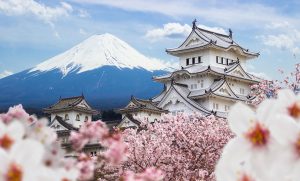
Osaka serves up amazing cuisine, superb shopping and a friendly spirit, with the restored Osaka Castle offering a spectacular lesson in Japanese history and culture. Osaka’s nickname – Tenka no Daidokoro (The Nation’s Kitchen) – originally referred to its Edo Period status as Japan’s rice-trade hub; today it refers to the city’s reputation as a gourmand’s paradise. Take in a 360-degree view from Abeno Harukas – Japan’s tallest skyscraper – before visiting the city’s spectacular aquarium and through Dotonbori, Osaka’s glittering heart. The immensely historical city of Kyoto is within reach, beckoning with spectacular architecture that includes thousands of Buddhist temples and Shinto shrines.
HIGHLIGHTS OF OSAKA
Get a glimpse into Japan’s past through two of its oldest, most revered attractions. Marvel at Osaka Castle, which was built to be Japan’s most formidable fortification. Behold the castle’s defensive walls, the tallest in Japan. Browse artifacts deemed national treasures in the Buddhist Shitennoji Temple.
SHINTO SHRINE & SAKE IN KYOTO
Enjoy a higher level of personal attention on this small group tour. Tour a Shinto shrine with thousands of torii gates and walk the trail beneath them. Browse a museum devoted to sake and sample some of the varieties afterwards. Pause for photos at an inn where several samurai were killed during an 1862 rebellion. Spend free time exploring Fushimi-ku, one of Kyoto’s many wards.
Kochi, Japan
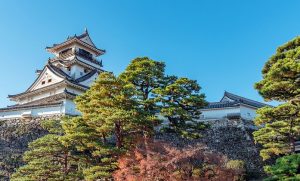
Kochi boasts beautiful and abundant natural landscapes, from an expansive coastline running with the Kuroshio Current to the clear Shimanto River and the deep green forests that surround it. Located in the south of Shikoku, Kochi is ringed by rugged mountains to the north, and its arc-like southern coastline traces the outline of Tosa Bay. To the east is Cape Muroto, and to the west, Cape Ashizuri, with gently undulating sandy beaches stretching between these two extreme points. The prefecture also boasts the mystical limestone caves of Ryu-ga-do, and the beautiful sands and green pines of Katsura-hama Beach.
HISTORIC KOCHI & VIBRANT CULINARY EXPERIENCE
Visit Kochi Castle, the seat of the powerful Yamauchi lords during the Edo Period. Stroll through a botanical garden of more than 3,000 indigenous and exotic plants. Browse the stalls of Hirome Market, where the bounty of the sea will be on display. Feast on a multi-course lunch featuring local bonito fire-seared to perfection.
Hiroshima, Japan
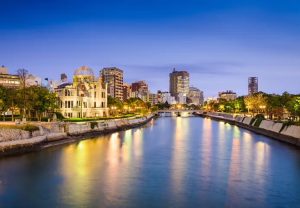
Hiroshima with its cosmopolitan energy, contemplative gardens, and spiritual depth, is a true center of Japanese creativity. Koi carp ease through ponds while water trickles beneath ornamental bridges in the peaceful Shukkei-en garden. The reconstructed Hiroshima Castle recalls the feudal era, and shrines are resplendent as the Sakura season’s pale pink spreads. In this culinary capital, okonomiyaki — an umami-rich savory pancake — is a must. Hiroshima is brushed with artistry too, and is renowned for its handmade Kumano brushes, crafted in the surrounding hills since the Edo period for calligraphy and traditional ink painting. The iconic floating torii gate of sacred Miyajima Island is also within reach, rising from calm waters. Cradled by the Honkawa and Motoyasu rivers, the Peace Memorial Park, Peace Memorial Museum, and Genbaku Dome offer spaces to reflect on the events of 1945.
HIROSHIMA HIGHLIGHTS
In the years just following the atomic bomb blast on August 6, 1945, scientists doubted if Hiroshima could ever live again. Yet modern Hiroshima rose like a phoenix from its own ashes, and less than five decades since its obliteration, it is a vital city with a population of one million and growing. This half-day tour highlights the remarkable landmarks of Hiroshima, a self-declared city of peace dedicated to a nuclear weapons-free world.
Begin at the poignant Hiroshima Peace Memorial Park and its powerful museum. Following the bomb attack, only a few concrete buildings remained standing. Though unusable, one of these ruins is now a symbol of the city and the Memorial Park: the Hiroshima Prefecture Industrial Promotion Hall, now known as the Atomic Bomb Dome, located near the epicenter of the blast. Declared a UNESCO World Heritage site in 1996, the Dome remains a stark and powerful symbol of the destructive force created by humankind. See the Cenotaph,shaped like an ancient tomb and holding the names of the dead, as well as the Flame of Peace, visited daily by monks offering prayers and burning incense.
Continue to the serene Shukkei-en Garden, located near the Hiroshima Castle. Modeled after the famous West Lake in Hangzhou China, Shukkei-en Garden is a quiet respite from the bustle of Hiroshima’s busy streets. Plum trees, azaleas, cherry trees and other plants guarantee a blooming landscape, regardless of the season, and its sculpted gardens, paths, ponds, bridges, waterfalls and bamboo groves make the garden an extremely pleasant and photogenic place for a stroll. Leaving the serenity of the garden behind, you’ll transfer directly back to the ship.
Day at sea cruising the Pacific Ocean
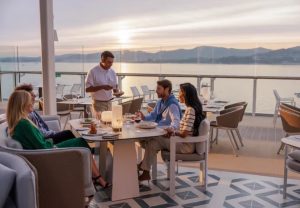
Cruising is the perfect opportunity to relax, unwind, and catch up with what you’ve been meaning to do. So whether that is going to the gym, visiting the spa, whale-watching, catching up on your reading, or simply topping up your tan, these blue sea days are the perfect balance to busy days spent
Kagoshima, Japan
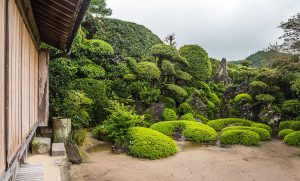
Kagoshima is Japan’s southernmost major city, and is nicknamed the “Naples of the Eastern World,” based on its caldera bay location, hot climate, and volcano. The majestic view of Mt Sakurajima, one of the world’s most active volcanoes, dominates the city’s landscape, towering over the beautiful Kinko Bay. The city abounds in historic sightseeing spots such as the memorial site of St. Francisco Xavier, who landed in Kagoshima and first introduced Christianity to Japan.
CHIRAN DISCOVERY
Explore Chiran, an out-lying castle town during Japan’s feudal period and home base for the feared kamikaze pilots during World War II.
Departing the port, take a scenic drive to Chiran to see the well-preserved residences and gardens of the Samurai. Surrounded by moss-covered stonewalls and sporting black tile roofs, the 250 year old housesrecapture the traditional flavor of the Edo Period. Today, Samurai descendants live some of the old estates, but many of the gardens are open to the public. Though small, each garden is an excellent example of “borrowed landscaping,” where the surrounding mountains and scenery are an integral part of the garden design.
Visit the memorable Tokko Heiwa Kaikan, or Peace Museum, dedicated to the young kamikaze pilots who trained near Chiran before embarking on suicide missions against Allied sea vessels in WWII. The museum commemorates the bravery and sad sacrifice of these young Japanese men, and makes a plea for world peace.
Nagasaki, Japan
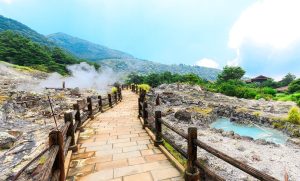
Japan’s early gateway to trade with the West, Nagasaki boasts stately European-style homes, a bustling harbor and fusion cuisine (be sure to try Nagasaki’s version of Castella sponge cake, introduced by Portuguese missionaries). The vibrant city is also synonymous with the dropping of the second atomic bomb, making a visit to Nagasaki’s Peace Park a necessary, and deeply moving, experience. Admire the city’s natural beauty atop Mount Inasayama. Drive through splendid countryside to browse the galleries of Arita, the birthplace of Japanese porcelain. Back in Nagasaki, wander Japan’s oldest Chinatown, trying Chinese food reinterpreted for Japanese tastes.
PANORAMIC NAGASAKI
Explore Nagasaki’s turbulent past and striking beauty during an orientation tour of this panoramic city.
Depart the pier for the scenic drive to Inasayama Hill, and a visit to the Inasayama Natural Park. Inasayama Hill is renowned for its spectacular sunset and nighttime views. Weather permitting, you will take in panoramic views and photo opportunities of Unzen, Amakusa and Gotoh Islands.
You will then continue on to Peace Park, dedicated to world peace. This 376,000 square-foot park features a large fountain, and different statues and sculptures donated by various countries and artists around the world in the name of peace. The main statue is nearly 33 feet tall, and was constructed in Nagasaki. It depicts a man with one arm raised to the sky to indicate the threat of nuclear destruction, and the other arm held horizontally in a gesture of peace. The man’s eyelids are closed in anguished prayer for those who perished in the bombing.
Next, you will proceed for a visit to Uragami Cathedral, formerly the largest cathedral in the East until it was destroyed by the atomic bomb. You will view Dejima, an artificial island built in 1636 AD in the Port of Nagasaki to house Japan’s Portuguese residents. Today, Dejima is no longer an island, as the surrounding area was reclaimed during the 20th century. However, a number of Dejima’s historical structures remain, or are being reconstructed in the area.
Jeju, South Korea
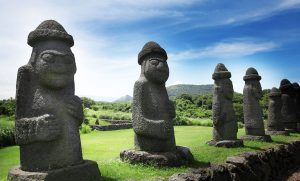
Island of Jeju or the “Island of the Gods,” is a UNESCO Biosphere Reserve due to the island’s dormant volcano Hallasan and diversity of plant and animal species.
The island is considered a culinary paradise with plenty of restaurants and a vibrant street food scene serving black pork unique to the island. Haenyeos are amazing, resilient women who free dive all day, scouring the seashore for shellfish, fresh fish, squid, octopus and sea cucumber
JEJU STONE PARK & CRATER
Explore an unusual volcanic crater filled with lush foliage rather than water. Delve into the island’s stone culture at Jeju Stone Park and its museum. Walk about the park and behold its seemingly countless stone statues.
WOMEN DIVERS AND SPIRITED GARDEN
Meet women that free dive without oxygen to collect seafood on the ocean floor. Watch a demonstration of their prodigious diving skills and how they minimize peril. Enjoy a serene walk through the world’s largest bonsai garden.
Try to reach a contemplative state of mind, the garden’s intent.
Day cruising the Yellow Sea
Cruising is the perfect opportunity to relax, unwind, and catch up with what you’ve been meaning to do. So whether that is going to the gym, visiting the spa, whale-watching, catching up on your reading, or simply topping up your tan, these blue sea days are the perfect balance to busy days spent
Incheon (Seoul), South Korea
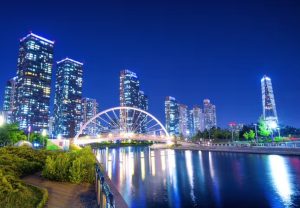
Incheon is steeped in history, notably in recent times during the Korean War. In 1950, the US general General MacArthur led UN forces behind enemy lines in freeing the city from North Korean pressure. MacArthur’s victory is commemorated by a statue in the Jaya (Freedom) Park. Incheon was granted “English Status” in 2007, with many residents priding themselves on their command of the language. Incheon was also the first to welcome the Chinese and today the city’s Chinatown is one of the most vibrant and welcoming. Try a steaming bowl of Jjajangmyeon from one of the many vendors, then walk it off with the short 15-minute stroll from Chinatown to the traditional Sinpo Market for a different kind of sensational feast.
INCHON HIGHLIGHTS
Visit a memorial hall honoring General Douglas MacArthur in the Battle of Incheon. See exhibits that detail the decisive victory that drove the North Koreans off the peninsula. Pause at a leafy Western-style park that features a statue of MacArthur. Browse two markets: one selling fresh seafood, the other offering a wider array of items.
Seoul South Korea DMZ
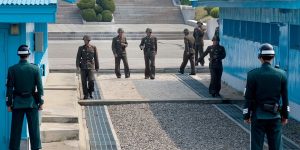 Explore the Demilitarized Zone or DMZ between North and South Korea, an area that exemplifies the long-standing tensions between the two countries. Along the way, the guide will point out sights such as Freedom Bridge, a narrow wooden structure that many North Koreans crossed to flee Communism at the end of the Korean War. Once you reach the DMZ, military personnel will brief you on the zone’s history. Only 2½ miles wide, the DMZ has been the site of much saber-rattling over the decades. The North Koreans built several secret tunnels hundreds of feet beneath the DMZ during the Cold War in case they wanted to stage a sneak attack. You will visit the Third Tunnel of Aggression through which as many as 30,000 troops could traverse each hour. Later, at the Dora Observatory, you will enjoy a panoramic aboveground view of North Korea.
DMZ 3RD TUNNEL
See the only bridge that connects North and South Korea. Listen to military personnel explain the history of the DMZ between the two countries. Explore a tunnel that the North Koreans built for a surprise attack on South Korea. Gaze across the DMZ from an observatory with views of several North Korean cities.
Seoul South Korea
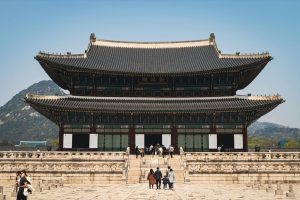 Royal Palaces & Traditional Seoul: Today we decided to explore the UNESCO Changdeokgung Palace, the most stunning of Seoul’s five main palaces celebrated for its harmonious architecture and exquisite Secret Gardens. It was then a short walk to Ikseon-dong Hanok Village, a charming area where historic houses have been revitalized into boutique cafes, artisan shops, and traditional tea houses—a perfect blend of past and present.
In the evening it was off to see Cheonggyecheon river lit up at night then Euljiro Nogari Alley which is lined with old-style pubs and restaurants.
Seoul South Korea
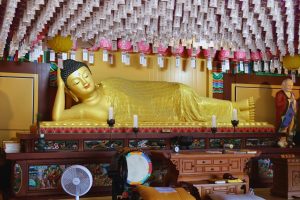 Royal Palaces & Traditional Seoul: Start with the city’s historic core and visit Gyeongbokgung Palace, the largest and most iconic palace to catch the royal guard changing ceremony at 10:00am. Next we explore Jogyesa Temple Peaceful Buddhist temple, especially pretty at night.
On the way back its Insadong for tea houses, crafts, antiques, and souvenirs in Seoul’s art district.
In the evening a Korean BBQ in the nearby Jongno area followed by a City tour to see it lit up at night.
Seoul South Korea
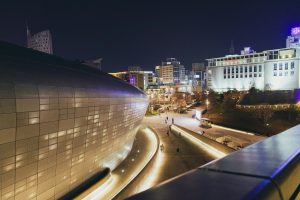 Modern Seoul & City Views a mix shopping, design, and skyline views: Metro to Dongdaemun Design Plaza to see futuristic architecture and exhibitions, also lovely at night. Then a taxi to visit N Seoul Tower for panoramic views; the cable car ride is part of the experience. Next a short stroll to Seoul City Walls followed by Namdaeum Market Shopping market and the Sungnyemum gate
This evening a cruise on Seoul Hangang River with a Starlight Aurora Cruise then explore Dongdaemun night markets
SEOUL NIGHT & TEMPLE CUISINE
See Seoul’s highlights at night when the capital is illuminated and most radiant. Delve into Korea’s past at a public square that has been a gathering place for centuries. Dine on traditional cuisine featuring dishes that originated in Buddhist temples. View a futuristic design center that is the world’s largest 3D amorphous structure. Admire the cultural space on Sebit Islets at night when its lights reflect off Hangang River.